
Grant County Court Dockets
A court docket is the chronological case log. Kansas court access rules also use the term events index. In Grant County, the docket can show when a case was filed, what pleadings or motions were entered, when hearings were set, whether a warrant or bond event appeared, and how the case was resolved. The docket helps a reader track progress without pulling every motion, order, exhibit, or certified document from the court file.
The distinction matters. A docket entry may say that an order was filed, but the entry is not always the order itself. A docket may list a plea, disposition, sentence, judgment, dismissal, or continuance, yet the underlying filed document may still require a copy request from the Clerk of the District Court. For legal use, a certified copy from the clerk is the stronger record.
- Docket
- The court's running list of case events.
- Events index
- The Kansas term for the public chronological list referenced in Rule 22.
- Disposition
- The outcome of a claim, charge, motion, or full case.
- Continuance
- A postponed hearing or deadline.
Find Grant County Dockets Online
Grant County District Court docket information is searched through Kansas CaseSearch when public district court data is available online. Kansas Supreme Court Rule 22 says the public may access a public case record and the events index through courthouse terminals and public portals, subject to court rules and confidentiality limits. The Grant County courthouse terminal remains important for older records, cases with limited online documents, or requests that need clerk help.
The Kansas Courts fine and fee resource is a separate payment channel, not the full docket, but it can point users to case or citation information for eligible payments.
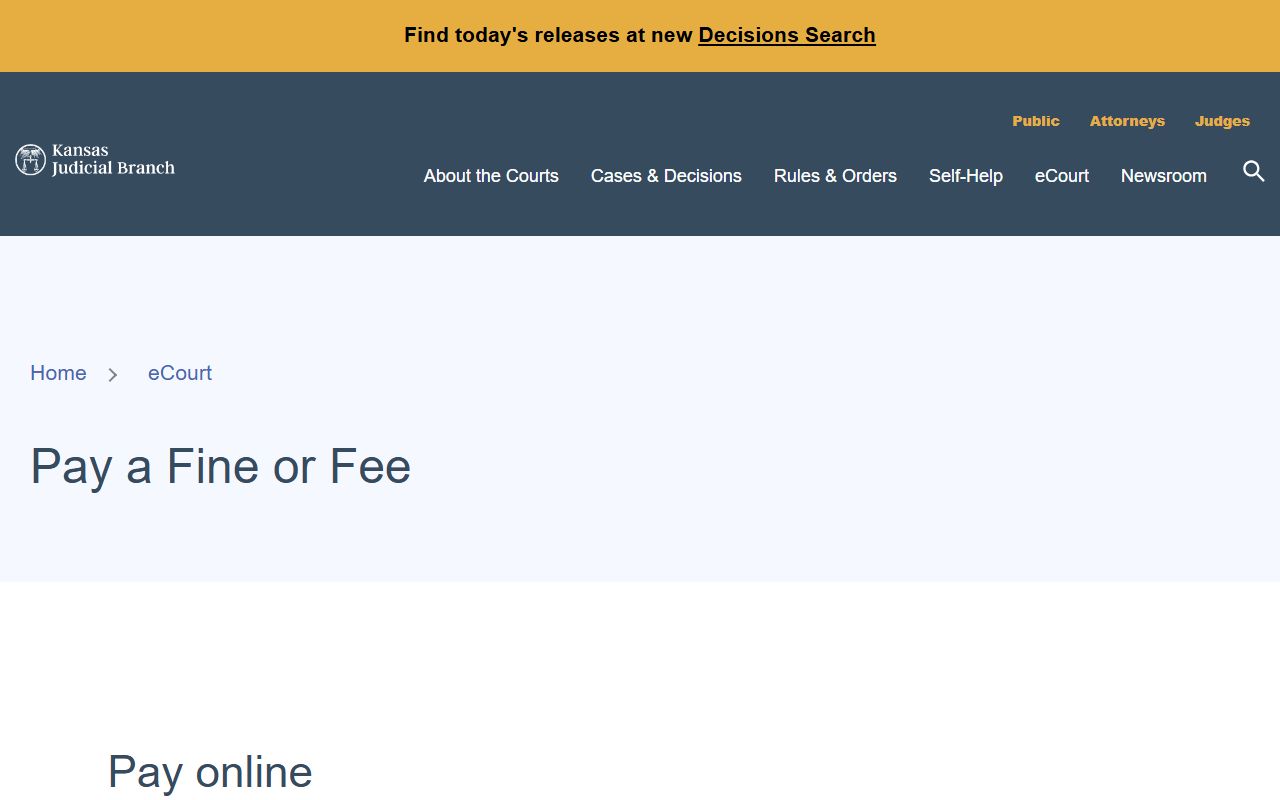
Payment pages should be used with care because paying a fine can affect a case; questions about hearings, pleas, or contested matters should go to the proper clerk.
- Open Kansas CaseSearch and search with the case number when available.
- Use a party name, business name, or citation if the case number is missing.
- Check the case type and court before reading the docket entries.
- Read the events index in date order, noting hearings, filed documents, orders, and disposition lines.
- Call the Clerk of the District Court if an entry is unclear, missing online, or needed as a certified document.
Use the courthouse terminal when the online result is thin. Kansas Courts states that public case records can be searched through terminals at each courthouse. In Grant County, that means the District Court and Clerk of the District Court at 108 S. Glenn, Second Level, Ulysses. A terminal search may help when a docket is public but remote access does not show all available events or documents.
Grant County Docket Entries
Grant County docket entries should be read as an inventory of case events. A short line may carry a lot of meaning: the date, event type, filing party, judge, hearing time, result, and sometimes a document link. If a document link is not visible, the docket can still identify what to request from the Clerk of the District Court. Restricted cases may show fewer details, and some events may be suppressed or redacted.
| Field | What It Shows |
|---|---|
| Entry Date | The date the event was filed, entered, heard, or recorded by the court. |
| Event Type | The activity, such as complaint filed, motion, notice, hearing, order, warrant, judgment, plea, or sentence. |
| Party Filing | The party or office linked to the filing, such as plaintiff, defendant, petitioner, respondent, State, or prosecutor. |
| Hearing Setting | The date, time, location, judge, and hearing type when public. |
| Document Link | A public electronic document link where remote access is allowed for that record and user role. |
| Disposition | The outcome of a charge, claim, motion, or full case. |
| Financial Event | Fines, fees, court costs, restitution, bond, or payment activity where public. |
Grant County Docket Channels
Docket access in Grant County depends on the court that created the record. The District Court handles the broadest case set: criminal, civil, divorce, domestic relations, probate, guardianship, conservatorship, juvenile, care and treatment, damage suits, small claims, and traffic matters outside Ulysses city limits. Ulysses Municipal Court handles violations of city ordinances and many city traffic cases. The sheriff and jail may hold related records, but they do not replace the court docket.
The KSCourts Central Payment Center is one channel for eligible payments linked to Kansas court cases and citations.
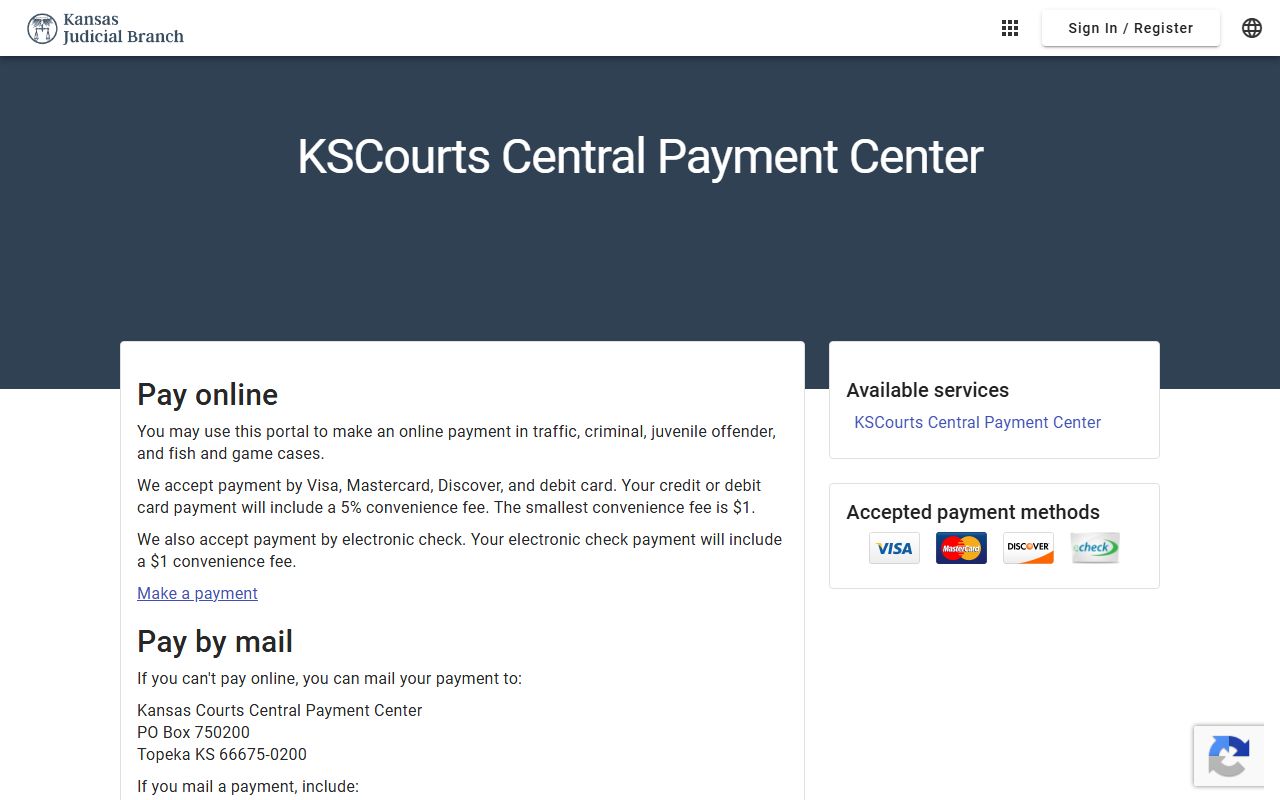
Because the payment center is not a full case file, it should be paired with CaseSearch, the courthouse terminal, or a clerk call when the issue is more than payment.
- Grant County District Court: public district court dockets through Kansas CaseSearch, courthouse terminals, and the Clerk of the District Court.
- Ulysses Municipal Court: city ordinance and city traffic docket questions through the municipal court at City Hall.
- 26th Judicial District: district-level context for Grant, Haskell, Morton, Seward, Stanton, and Stevens counties.
- KSCourts Central Payment Center: eligible fine, fee, and citation payment search, not a substitute for the court file.
- Federal courts: separate PACER and District of Kansas channels for federal civil and criminal dockets, not Grant County District Court records.
Docket vs Case Record
A Grant County court docket can answer basic progress questions: whether a case exists, when it was filed, what events have occurred, what hearings are set, and whether the case appears closed. A full case record goes further. It may include complaints, answers, motions, orders, judgments, sentencing documents, returns of service, exhibits, and certified copies.
| Docket | Full Case Record | |
|---|---|---|
| Format | Chronological event list | Filed documents and court orders |
| Best Use | Track dates, hearings, and outcomes | Review legal filings or obtain certified proof |
| Access | Often visible online or on a courthouse terminal | May require a clerk request, copy fee, or in-person review |
| Limits | May omit restricted detail or full document text | May be sealed, redacted, or limited by user role |
| Example | Order filed on a date | The actual signed order |
Grant County Docket Inventory
The research did not identify a county-specific sample docket screenshot, but it did identify the public fields that Kansas district court records can contain. A useful Grant County docket inventory starts with the case header, then moves through the event list. Each line should be checked against the court, case type, and date because municipal matters, district court matters, and payment records can look similar to a casual searcher.
The KSCourts payment search page can help locate eligible violation or payment records tied to some cases.
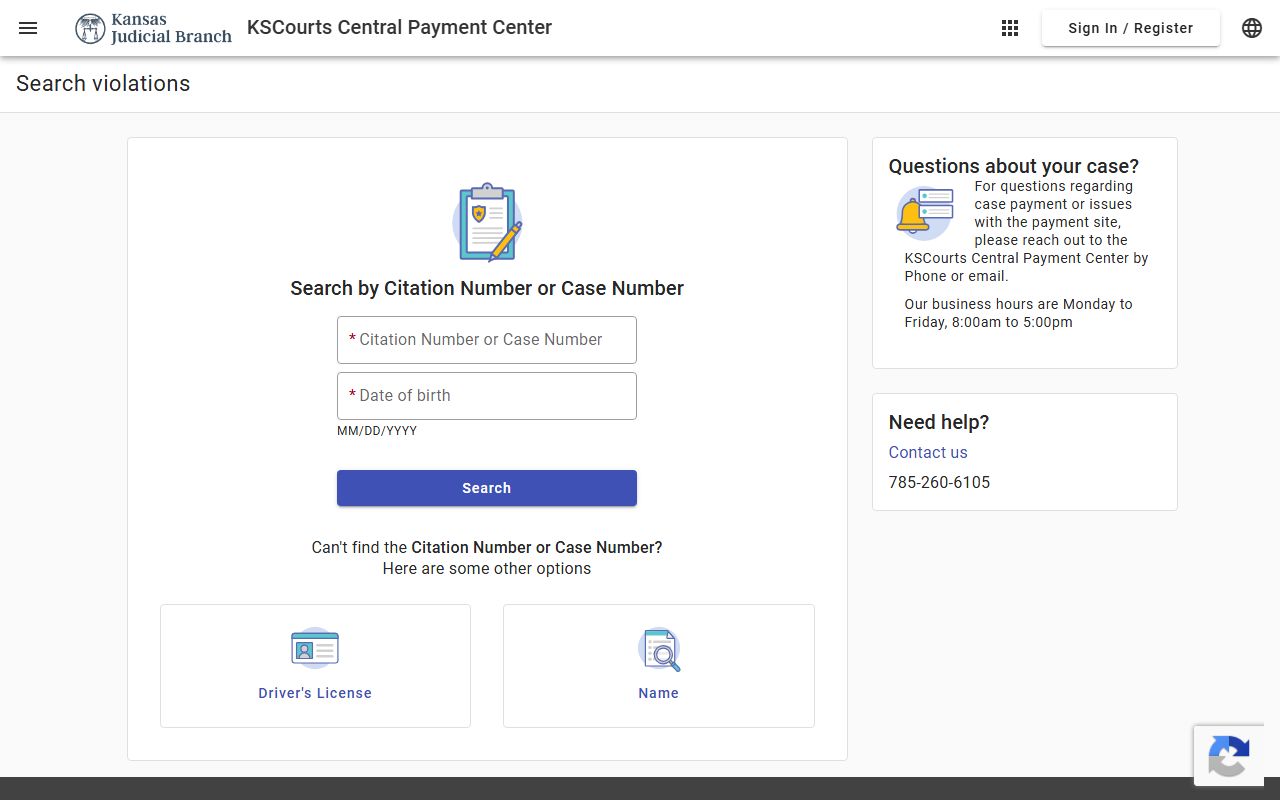
Use a payment search result as a routing clue, then confirm the docket and court status through the proper court channel before acting on it.
| Docket Item | How to Use It |
|---|---|
| Case number | Use it in CaseSearch, clerk calls, courthouse terminal searches, and copy requests. |
| Case type | Confirms whether the matter is criminal, civil, domestic, probate, small claims, juvenile, or traffic. |
| Status | Shows whether the case appears open, pending, closed, disposed, or otherwise active. |
| Judge | Identifies the district judge or magistrate judge assigned when public. |
| Hearing date | Shows upcoming or past court events, but parties should verify current settings with the clerk. |
| Order or judgment entry | Signals that a document may exist, even if the document is not viewable online. |
| Financial line | May identify court costs, fines, restitution, bond, or payment activity. |
Read Grant County Dockets
Read docket entries from oldest to newest to understand the case path. In a civil case, the early lines may show petition, answer, service, motions, hearing settings, and judgment. In a criminal case, the early lines may show complaint or information filed, first appearance, bond, arraignment, plea, motion practice, trial setting, disposition, and sentence. In probate, the docket may track petition, notices, appointment of a fiduciary, inventory, accounting, and final settlement.
A docket can change quickly. Hearing settings can move, warrants can be recalled, payments can post, and orders can be entered after an online screen was viewed. For that reason, parties and witnesses should verify court dates directly with the Clerk of the District Court or Ulysses Municipal Court rather than relying on an old printout.
Grant County docket searches also require careful venue checks. A ticket issued outside the city limits of Ulysses goes to Grant County District Court, while a ticket issued inside the city limits goes to City of Ulysses Municipal Court. Criminal cases filed by the County Attorney belong in District Court. City ordinance cases belong in Municipal Court. The same person can have records in more than one channel, so read the issuing court and case type before assuming a docket covers every local matter.
For copies, use the docket to identify the exact document. Ask for the order, judgment, complaint, sentencing journal entry, or notice by name and date if the docket gives that detail. That keeps the request narrow and helps the clerk avoid searching the full file when only one document is needed. Bring photo identification if the clerk needs it to review access limits or certify a copy.
Note: A docket line is a lead to the record, not always the record itself.