
Grant County Probate Court
Probate in Grant County is handled by the District Court, not by a separate surrogate court or orphans' court. The Grant County District Court page lists probate and administration of estates among the court's general-original-jurisdiction categories. The same local court page also lists guardianships and conservatorships. Those matters often overlap with probate-record searches because they involve fiduciaries, protected persons, assets, accountings, and court supervision.
The filing and records office is the Clerk of the District Court. Requests should be directed to the clerk when the needed record is a probate petition, estate case file, will filed in court, order appointing a fiduciary, inventory, accounting, final settlement, guardianship order, or certified court copy. The Register of Deeds may be useful for land records tied to an estate, such as deeds or recorded property documents, but it is not the probate court clerk.
The Grant County Register of Deeds page is useful for recorded property documents that may connect to an estate, but probate case records remain District Court records.
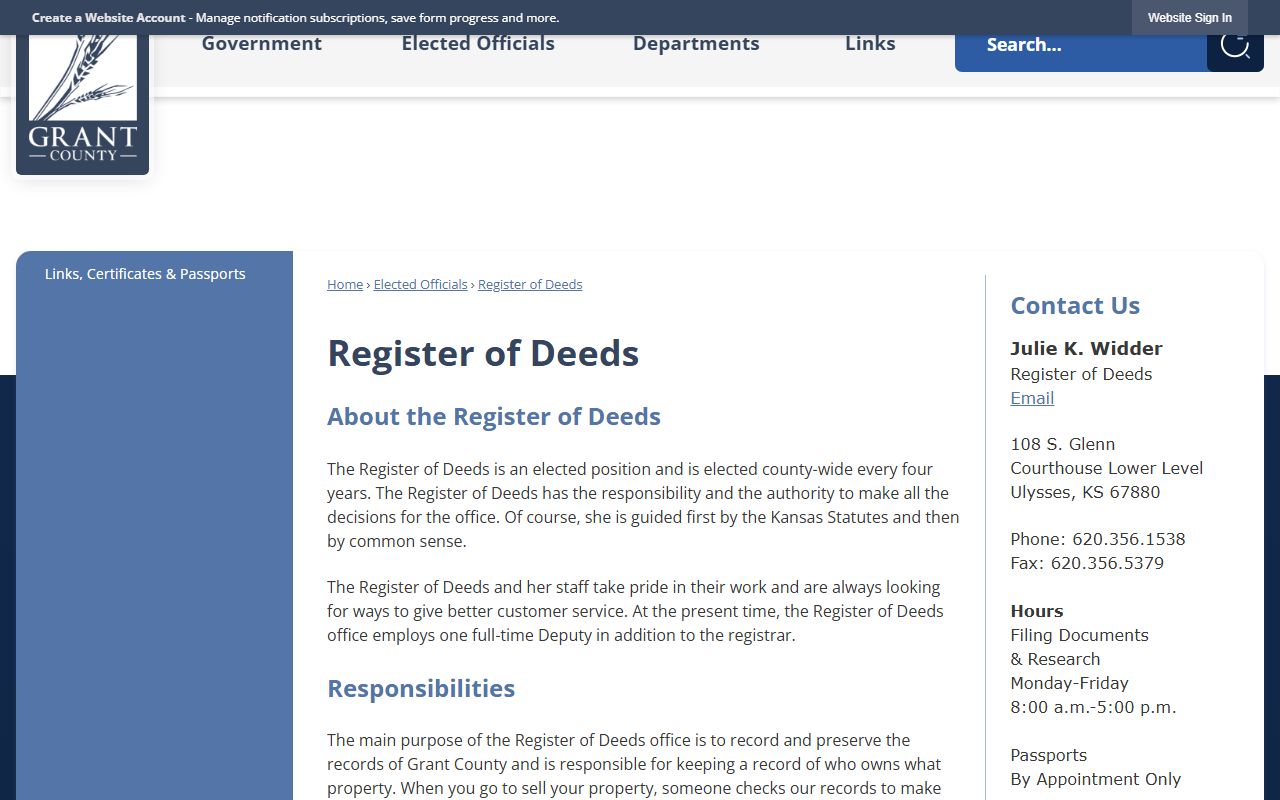
Use recorded-property sources only for land documents, then return to the District Court for probate orders and case files.
Grant County Probate Terms
Probate records use terms that are short but easy to misread. A fiduciary is a person with legal duties to act for another person or estate. Letters are court documents that show the fiduciary's authority. A will is not automatically a public court record just because it exists. It becomes part of a probate file when it is deposited, filed, admitted, or otherwise handled in a court proceeding.
- Testator
- The person who made a will.
- Executor
- The person named in a will to carry out estate duties after court appointment.
- Administrator
- A fiduciary appointed when there is no valid executor available.
- Intestate
- Dying without a will that controls the estate.
- Guardianship
- A court-supervised case about personal care or decision-making for a minor or adult.
- Conservatorship
- A court-supervised case about property or financial management for a protected person.
Search Grant County Probate
Grant County probate records can be searched through the same district-court access channels used for other public court records. Kansas CaseSearch is the statewide online portal for public district-court information where records are available. Courthouse terminals offer another official access channel. If the estate is older, not online, not indexed in a way that matches the search terms, or needs a certified copy, contact the Clerk of the District Court directly.
The best search data is the case number. If that is unknown, search by decedent name, estate name, petitioner name, guardian name, conservator name, approximate filing year, or case type. For courthouse or clerk requests, state the exact document needed. "Everything in the file" can be slower and more costly than asking for the order appointing executor, letters testamentary, will, inventory, accounting, or final settlement.
- Search Kansas CaseSearch for public district-court probate information if online access is available.
- Use a courthouse terminal at the Grant County Courthouse when online results are incomplete or a document is not remote-accessible.
- Contact the Clerk of the District Court with the case number, estate or decedent name, date range, and requested document.
- Ask for certification if the copy must be used for a bank, land transfer, court filing, or other official purpose.
- For land records created after probate, check the Register of Deeds separately.
The Grant County District Court contact form is another route for court-office questions when a probate record search needs clerk follow-up.
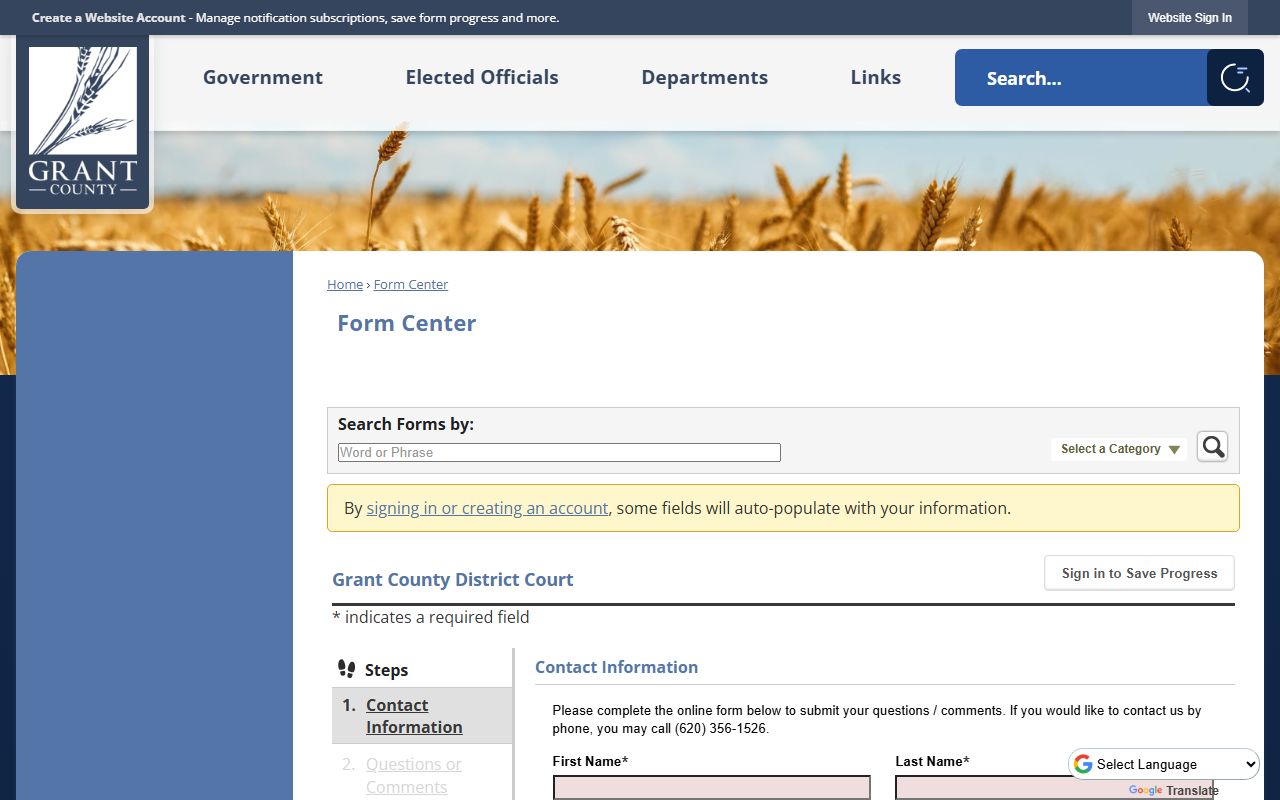
A clerk request works best when it names the estate, case number if known, and the exact probate document needed.
Probate Search Fields
The probate search field set is narrow because many estate searches rely on names and dates. CaseSearch and courthouse terminal layouts may vary by user role and data availability, but the core search logic is the same: identify the estate or protected-person matter, then narrow by case type or filing date when possible. Name variants matter. Try full legal names, known aliases, and estate captions when a first search fails.
| Field Label | Type | Required | Options / Format Notes |
|---|---|---|---|
| Case number | Text | Optional, primary if known | Fastest way to locate a probate file. |
| Party/name | Text | Optional | Search decedent, estate, petitioner, guardian, or conservator. |
| Case type | Dropdown/filter | Optional | Select probate, estate, guardianship, or related category if available. |
| Case status | Dropdown/filter | Optional | Open, closed, or similar status filter where available. |
| Filing date range | Date range | Optional | Useful for older estate searches and common names. |
Grant County Probate Contact
There is one local court contact for Grant County probate and estate case files: the Clerk of the District Court. Call before visiting if the file is old, the request is large, or a certified copy is needed by a deadline. The county pages reviewed do not publish separate probate counter hours, so use the District Court office hours and confirm any visit needs with the clerk.
Clerk of the District Court
Grant County Courthouse
108 S. Glenn, Second Level
Ulysses, KS 67880
(620) 356-1526
Monday-Friday, 8 a.m.-5 p.m.
Probate Copy Fees
The research file does not identify a Grant County-specific probate filing fee schedule, so filing costs should be confirmed with the Clerk of the District Court before submitting a new estate, guardianship, or conservatorship matter. Copy costs are clearer. Kansas Courts' request-records guidance identifies 25 cents per page for copies, $10 per certified document, and mailing charges of 50 cents for the first five pages plus 25 cents for each additional five pages. Grant County open-records fees may include staff time and copying costs for county records, but court case copies go through the court clerk.
| Item | Amount or Rule |
|---|---|
| Plain Kansas court copy | 25 cents per page. |
| Certified court document | $10 per certified document. |
| Mailing charge | 50 cents for the first five pages and 25 cents for each additional five pages. |
| Probate filing fee | Confirm current amount with the Clerk of the District Court. |
| County open-records costs | Grant County may request staff-time and copying/reproduction costs in advance for county records. |
| Register of Deeds recording fees | Use the Kansas Register of Deeds fee schedule for recorded land documents, not court probate copies. |
Grant County Probate Files
A Grant County probate file may begin with a petition to admit a will, administer an estate, appoint a fiduciary, or open a guardianship or conservatorship. Estate files can include the will, codicil, statement that no will exists, notices, letters testamentary, letters of administration, creditor notices, inventory and valuation, claims, accountings, receipts, waivers, and final settlement orders. Guardianship and conservatorship files may include petitions, appointment orders, reports, medical or financial submissions, and continuing supervision documents.
Not every document has the same access level. A routine estate docket may be public, but a guardianship medical report or protected person's financial statement may be restricted. If the search is about title to land, probate records may explain who had authority to act for the estate, while the Register of Deeds may hold the recorded deed or other instrument that changed title.
| Document | What It Usually Shows |
|---|---|
| Petition | The request to open the estate, admit a will, appoint a fiduciary, or start a guardianship/conservatorship. |
| Will or codicil | The written estate plan filed or admitted through the court. |
| Letters | The fiduciary's authority to act for the estate or protected person. |
| Notice to creditors | Notice used to start or document claim deadlines. |
| Inventory and valuation | Assets reported to the court, with access limits where required. |
| Final settlement | The order or filing that resolves the estate or closes the matter. |
Grant County Estate Process
A probate matter opens in Grant County District Court when venue is proper in Grant County. A petitioner files required documents with the Clerk of the District Court. The court issues notices and sets hearings as required. If the court approves the request, the judge appoints a fiduciary such as an executor, administrator, guardian, or conservator. The estate or protected-person matter then moves through inventory, creditor claims, accountings, orders, and final settlement or ongoing supervision.
That process creates the records that later searches find. A person looking for proof that someone has authority to act for an estate may need letters testamentary or letters of administration. A person checking whether an estate closed may need the final settlement order. A person researching land may need both a probate order and a recorded deed. Naming the purpose of the request helps the clerk identify the right document.
Restricted Probate Records
Grant County probate records are not all open in the same way. Routine estate dockets may be public, but guardianship, conservatorship, medical, minor, and financial details can be restricted or redacted. Kansas public-access rules also protect sealed records, personal identifiers, protected addresses, financial-account data, and confidential medical information. A will is not public merely because someone wrote it. It becomes part of a court record only when filed, deposited, admitted, or otherwise handled in a probate proceeding.
When a clerk cannot release a record, ask whether a public docket entry, redacted copy, certified order, or court permission process is available. Do not assume that a missing online record means no case exists. Older files, restricted documents, and non-digitized records may require courthouse or clerk access.
Note: For legal advice about estate rights, fiduciary duties, or contested probate issues, consult a Kansas attorney rather than relying on a record clerk.